
Drag & the power curve
Definition
Explanation
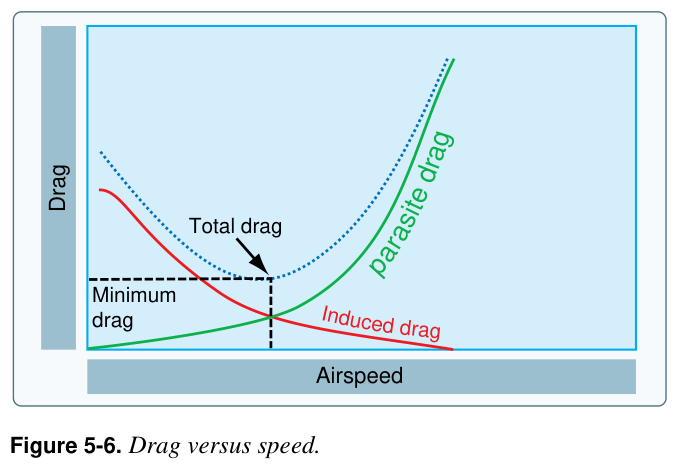
Because the two drags trade places as speed changes, there's exactly one speed where total drag is least. Fly faster and parasite drag runs the total up; fly slower and induced drag runs it up. That least-drag speed (L/Dmax) also gives a propeller airplane its best range.
Why it matters
I have students memorize best-glide speed cold and practice trimming straight to it — hands off — so it's automatic the day the engine gets quiet.
A DPE might ask
- What are the two kinds of drag, and how does each change with airspeed?
- What is significant about the speed for L/Dmax?
Definition
Explanation
On the front side of the curve, easing power off lets the airplane slow down. Cross to the back side and that reverses: to hold altitude at a slower speed you have to add power to overcome the fast-rising induced drag. Get slow and low on a dragged-in approach and you can run out of power to arrest the sink — the airplane keeps descending even at full throttle.
Why it matters
Students reflexively pull the nose up to stop a descent. Behind the power curve that backfires: raising the nose without adding power increases the angle of attack and induced drag, so the airplane sinks faster and slows toward a stall. The fix is power for the sink, pitch for the speed.
In the region of reversed command, to fly slower in level flight you need to...
On a slow approach, keep some power in and fly the airspeed with pitch. If the airplane starts to sink, add power first — pulling the nose up alone will only deepen the sink and bleed speed toward a stall.
A DPE might ask
- What is the region of reversed command, and where do you encounter it?
- If you're behind the power curve and start to sink, what corrects it?