
The four forces of flight
Definition
Explanation
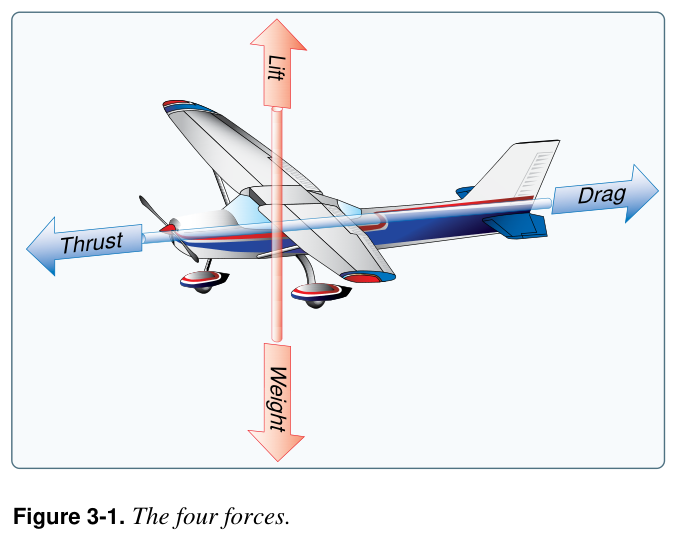
Lift opposes weight, and thrust opposes drag. Every phase of flight is these two pairs shifting balance.
Why it matters
I have students point to each force on the airplane and name what it opposes before we ever talk about maneuvers. Get the four arrows solid first.
A DPE might ask
- Name the four forces and what each one opposes.
- Which direction does lift act — relative to the wing or the horizon?
Definition
Explanation
Nothing is 'winning.' Change one force — add power, raise the nose — and the balance is upset until the airplane settles at a new speed or altitude.
Why it matters
Students often think lift must be greater than weight to stay level or to climb. In steady level flight lift equals weight — and you climb by adding power (excess thrust), not by making more lift than weight.
In steady, level, unaccelerated flight, how does lift compare to weight?
Purists' note for the checkride: in a steady climb, lift is slightly LESS than weight — thrust supports part of the weight and weight tilts aft along the flight path. You climb because of excess power, not extra lift.
A DPE might ask
- In level unaccelerated flight, how do lift and weight compare?
- What actually makes the airplane climb?