
Left-turning tendencies
Definition
Explanation
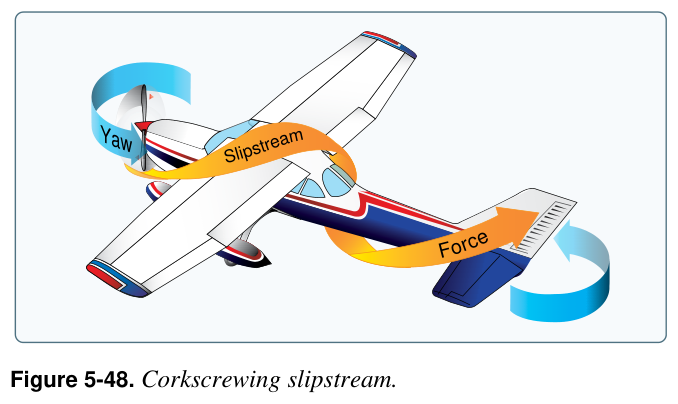
All three are strongest when power is high and the airplane is slow at a high angle of attack — exactly the takeoff and initial climb. You hold the nose straight with right rudder, keeping the ball centered.
Why it matters
I tell students the airplane 'asks for right rudder' the moment they push the throttle up — anticipate it rather than chase it after the nose has already swung.
A DPE might ask
- Name the left-turning tendencies and say which are yaws.
- Why is right rudder needed on takeoff and in the climb?
Definition
Explanation
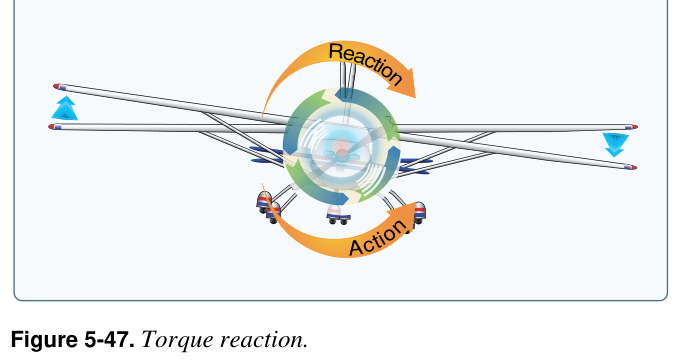
Keeping yaw and roll straight matters because they're fixed with different controls: the rudder handles the three yaw tendencies, while aileron and trim handle the torque roll. On a normal takeoff you're doing both — right rudder for the yaw and a touch of right aileron for the roll.
Why it matters
A common mix-up is to think you counter these tendencies with left rudder, or that torque is a yaw. Every tendency is to the left, so the yaw fix is right rudder; and torque is a roll, held off with right aileron or trim — not rudder.
Which control primarily counters propeller torque (the left roll)?
Set climb trim and expect to carry right rudder the whole climb. If a wing keeps dropping, that's the torque roll — level it with aileron, don't try to fix it with rudder.
A DPE might ask
- Why is torque a rolling tendency rather than a yaw?
- How do you counter the torque roll versus the yaw tendencies?