
Flight controls, trim & flaps
Definition
Explanation
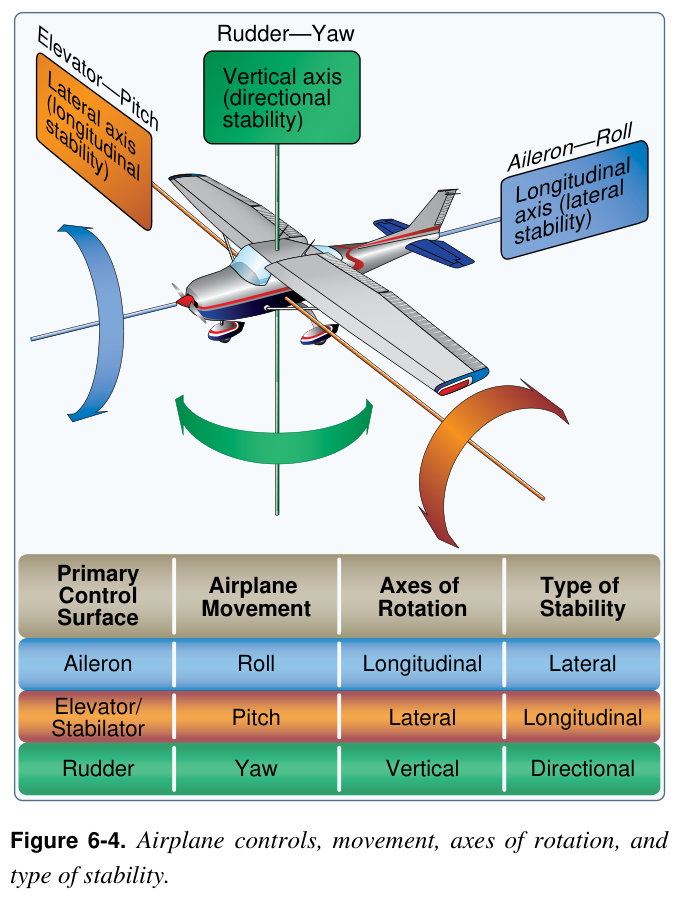
Each axis runs through the airplane's center of gravity. Longitudinal is nose-to-tail (roll), lateral is wingtip-to-wingtip (pitch), vertical is straight up-and-down through the CG (yaw). The control that produces each motion is the one whose surface is farthest from that axis — ailerons out on the wings for roll, elevator back on the tail for pitch, rudder on the tail for yaw.
Why it matters
Ailerons bank the airplane; they don't turn it by themselves. The rudder keeps the turn coordinated and counters the yaw that aileron drag and propeller effects create — that's why we say 'step on the ball.'
A DPE might ask
- What are the three axes and the primary control for each?
- Which control produces roll? Pitch? Yaw?
Definition
Explanation
Because it's a mechanical linkage, your flight-control preflight checks three things: the surfaces move in the correct direction for the input, they move fully and freely with no binding, and everything is secure. Look at the surface while you move the control — don't just feel the yoke.
Why it matters
Actually watch each surface during the control check. Reversed aileron rigging after maintenance has caused fatal accidents — the yoke feels normal; only looking catches it.
A DPE might ask
- How do the cockpit controls connect to the surfaces?
- What are you checking during the flight-control preflight?
Definition
Explanation
The sequence matters: set the attitude, set the power, then trim off the remaining pressure. Trim is the last step, not the first. Chasing the airplane with trim — trying to trim your way to an attitude instead of establishing it first — is one of the fastest ways to get behind the airplane.
Why it matters
A common mistake is using trim to establish the attitude — cranking trim to get the nose where you want it. That leaves you chasing the airplane. Trim is for relieving the control pressure after you've already set the attitude with the yoke and the power.
You want to establish a climb. What's the correct role of trim?
A DPE might ask
- What does trim actually do?
- What's the correct order: attitude, power, and trim?
Definition
Explanation
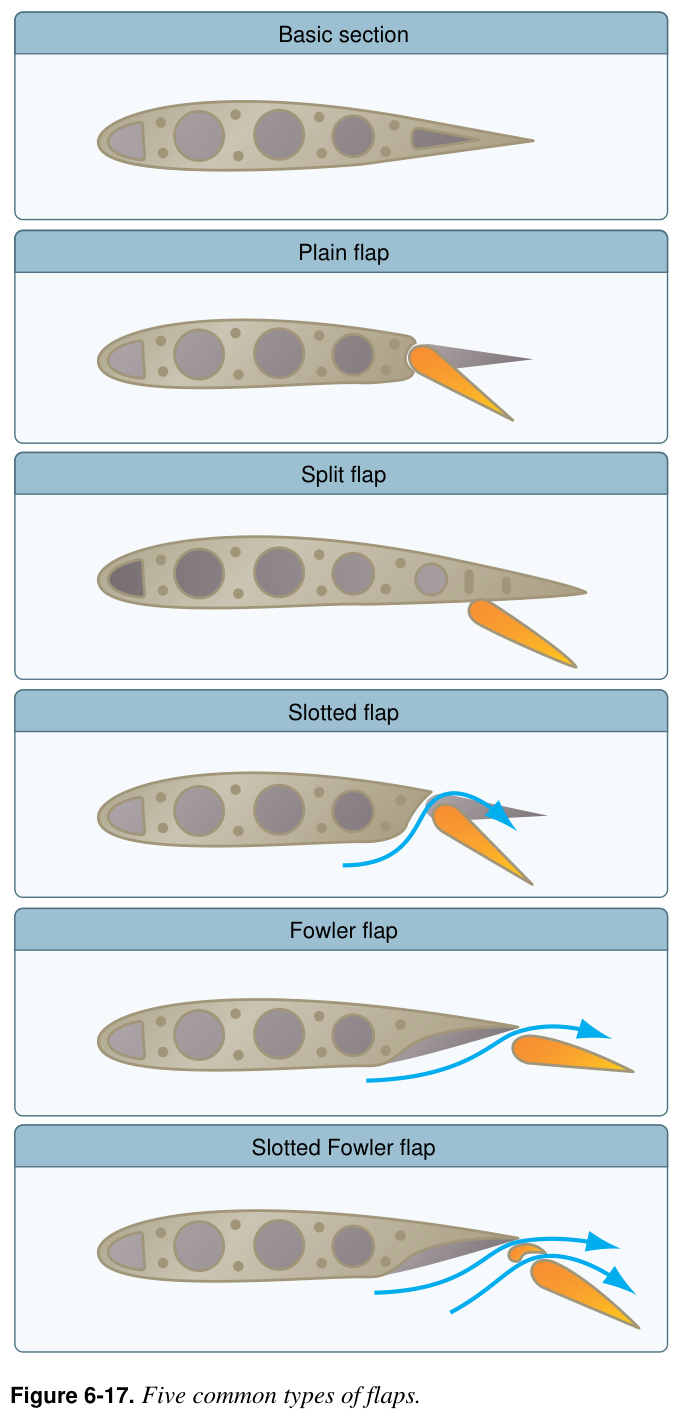
The trade is lift and drag together: partial flaps mostly add lift (useful for takeoff in some airplanes), while full flaps add a lot of drag (useful for a steep, slow final approach). Because flaps change lift and pitch, expect a trim change when you extend or retract them — and never exceed the white-arc flap-limit speed.
Why it matters
Flaps aren't a fix for a fast or high approach. Get stabilized first, then use the configuration your POH teaches — don't dump full flaps to salvage a bad setup.
A DPE might ask
- What do flaps do to lift and drag?
- Why do we use flaps on approach, and what limits their use?