
Weight & Balance
Definition
Explanation
Weight affects performance — an overloaded airplane takes more runway, climbs worse, and stalls faster. Balance affects control and stability — where the weight sits front-to-back sets how the airplane handles and how it recovers from a stall or spin. This is the payoff of the Module 2 stability lesson: weight and balance is how you confirm the CG is where the designer needs it, on every single flight.
Why it matters
A DPE might ask
- What two limits does weight and balance confirm?
- Can an airplane be within gross weight but still unsafe to fly? How?
Definition
Explanation
Empty weight is the airplane with all fluids but no people, bags, or usable fuel; useful load is max gross minus empty weight, and payload is what's left after fuel. Usable fuel weighs about 6 pounds per gallon (avgas). You get your airplane's empty weight, arm, and moment from the current weighing recorded in the POH equipment list — not the sample figures in the handbook.
| Term | What it means |
|---|---|
| Datum | The reference line the manufacturer measures everything from (often the firewall or spinner). |
| Arm | The distance from the datum to an item's location, in inches. |
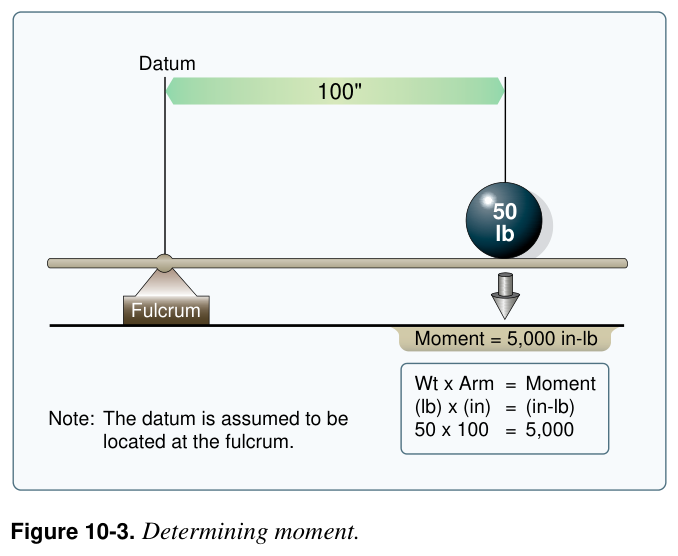
| Moment | Weight × arm. It measures the turning effect of a weight about the datum. |
| Center of gravity (CG) | Total moment ÷ total weight — the balance point of the loaded airplane. |
| Empty / useful load | Empty weight is the airplane with fluids but no payload or usable fuel; useful load = max gross − empty weight. |
Why it matters
A DPE might ask
- Define datum, arm, moment, and CG.
- What's the difference between empty weight, useful load, and payload?
Definition
Explanation
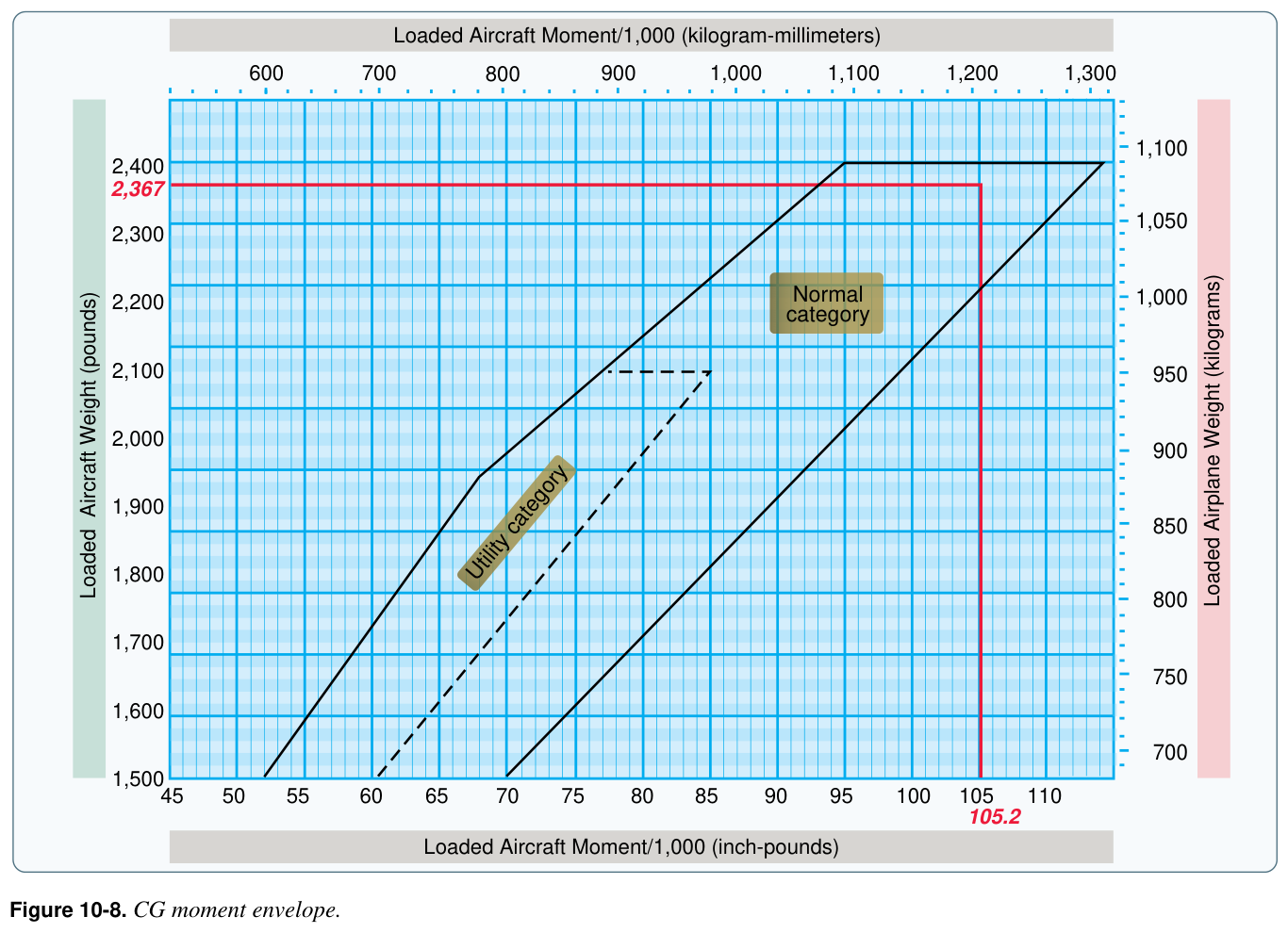
Where the CG sits changes how the airplane flies. A forward CG makes it more stable but gives heavier controls, a higher stall speed, and a harder flare. An aft CG makes it less stable and twitchier, and — most importantly — degrades stall and spin recovery, which is why the aft limit is the more dangerous one to exceed. Real POH envelopes are sometimes plotted against moment (as here) or slope with weight; this course's calculator uses the simpler conservative box, and using the most-restrictive forward limit is always safe.
Why it matters
A DPE might ask
- What does the CG envelope show?
- Compare the effects of a forward vs an aft CG.
Definition
Explanation
The calculator below does exactly that with your airplane's numbers. Enter what you're carrying and it computes each moment, the totals, and the CG, then plots your point on the envelope and tells you whether you're within limits. Fill in your airplane's constants (empty weight, arms, limits) in My Aircraft first.
Why it matters
A DPE might ask
- Walk me through a weight and balance computation.
- How do you find the CG from the moments and weights?
Definition
Explanation
Overloaded, the airplane needs more runway, climbs poorly, stalls at a higher speed, and has less structural reserve. Too far aft, it's unstable and its stall/spin recovery is degraded; too far forward, it's nose-heavy with heavy controls, a higher stall speed, and maybe not enough elevator to flare. The fix is always the same: reduce or redistribute the load — move weight, offload baggage, or adjust fuel — until both weight and CG are legal.
| Out of limits | What happens |
|---|---|
| Overweight | Longer takeoff roll, reduced climb, higher stall speed, less structural margin — the book numbers no longer apply. |
| CG too far aft | Less stable and twitchy in pitch, and dangerously degraded stall/spin recovery. The more hazardous limit to exceed. |
| CG too far forward | Nose-heavy: heavier controls, higher stall speed, and you may run out of elevator to flare. |
| The fix | Reduce or redistribute the load (move or offload weight, adjust fuel) until both weight and CG are within limits. |
Why it matters
A common misconception is that staying under max gross weight means you're safe to fly. You can be well under gross and still outside the CG envelope — an aft-CG loading with light fuel and rear-seat passengers is the classic trap. Always check BOTH the weight and the CG.
Your airplane is 200 lb under max gross, but the CG is 0.5 in aft of the aft limit. Is it safe to fly as loaded?
A DPE might ask
- What are the effects of being overweight? Of an aft CG? A forward CG?
- How do you correct an out-of-limits loading?
Definition
Explanation
Use your airplane's current empty weight and arm from the most recent weighing in the POH equipment list, not the sample numbers in the handbook, because equipment changes shift them. The numbers you saved in My Aircraft feed the calculator — keep them current, and re-run the numbers whenever the loading is unusual. Confirm both limits, every flight.
| Weight & balance habit | Detail |
|---|---|
| Two limits, every flight | Confirm total weight ≤ max gross AND CG inside the envelope — being under gross is not enough. |
| Takeoff and landing | Fuel burn shifts the CG, so check both ends of the flight. |
| Use current data | Use your airplane's current empty weight/arm from the latest weighing in the POH equipment list — not the sample in the book. |
| Your profile | The numbers you saved in My Aircraft feed the calculator — keep them current. |
Why it matters
A DPE might ask
- Why check weight and balance for both takeoff and landing?
- Where do you get your airplane's empty weight and arm?